Wallace Clare Award
In 2020 the Irish Genealogical Research Society inaugurated its Wallace Clare Award, through which it celebrates outstanding, long-term contributions to the development of Irish genealogy worldwide.
In its initial year the award was presented to four recipients, all of whom had made a significant impact on aspects of the study of the genealogy of the people and diaspora of Ireland. Reflecting the global spread of Irishness, two of the four inaugural recipients were from the USA and one from Argentina. The fourth person was honoured posthumously for a major one-name study that involved records from many countries.
Who was Wallace Clare? The Award is named in honour of Rev. Wallace Clare (1895-1963), a Catholic priest and keen academic who founded the IGRS in 1936. This was as a response to the great conflagration of 1922, which consumed almost the entire contents of Ireland’s Public Record Office. Fr. Clare initiated the Society's core policy of maintaining a library which 80 years later holds an invaluable collection of transcripts and abstracts compiled from documents subsequently destroyed in the fire. He was the author of the first ever work on Irish ancestral research, A Simple Guide to Irish Genealogy, published in 1937. Unsurprisingly, Fr. Clare was the first individual to be elected a Fellow of the IGRS.
The Wallace Clare Award Recipients
| 2025 | |
|
|
Nick Reddan, MSc GradDipStat, BEc, FIGRS Nick is a Fellow of the Society and a member of its governing Council. The award recognises the enormous amount of voluntary work Nick has done over the past three decades. His major worldwide contribution is the freely available online Registry of Deeds Index Project database. In addition, he maintains a Newspaper Extracts database, he lectures and he has written books and many journal articles. Nick is a native of Queensland. His Reddan ancestors were from County Clare, while his mother is descended from Irish Crokers. He began seriously researching his family history in 1988. In the early 1990s he spent a few years in London and it was then that he came in contact with the IGRS. He joined in 1992. He has also devoted enormous time to the society over the years, as a Council member and as webmaster, with a particular focus on databases. Nick was elected a Fellow of the IGRS on 2006. He is also a Fellow of Family History ACT. He is the second Australian recipient of the Wallace Clare Award, following Jennifer Harrison, who received it in 2022. His own Newspaper Extracts database currently has over 28,000 records, more than half of which were extracted by him. The remainder were donated by the late Simon de Montfort, wishing that his collection would remain available. Nick’s books include Raw History for Old Kilmallock Town (2011), while his articles have appeared in Ancestors, the Ancestral Searcher, Descent, the Genealogist’s Magazine, The Indexer, the Irish Genealogist and Kilmallock Journal. Nick’s online Registry of Deeds Index Project database is a phenomenal achievement. The Registry of Deeds is particularly rich in Irish genealogical information for the eighteenth and early nineteenth century, though the earlier years are more relevant to prosperous, mainly Protestant families. The index project began in 2007, as Nick’s creation. He has maintained it for over eighteen years, supplying a substantial amount of entries himself. |
| 2024 | |
 |
Claire Santry FIGRS Claire is a Fellow of the Society and a former member of its governing Council. The award recognises her dedication to the promotion of Irish genealogy over many years through which she has had a particularly significant impact on the development of Irish ancestral research. She has had a long career in mainstream journalism, the skills for which she used in her many articles on genealogy published in such magazines as Family History (UK), Family History Magazine (USA) and Practical Family History (UK) and in her a regular quarterly news column in Irish Roots. Across the globe, Claire is perhaps best known by Irish family history researchers for her unparalleled ‘Irish Genealogy News’ blog, which published its first news item on 11th March 2010. It operated for fourteen years, finally coming to an end in 2024. During that time Claire published 5,764 blogposts bringing much awaited news to those involved in Irish ancestral research. Quite often she published scoops, well ahead of any competition, and which ensured that her blog became the go-to site for those seeking as-it-happens news from the world of Irish genealogy. However, when considering Claire as a candidate for the Wallace Clare Award, the Awards sub-committee took particular note of several other of her contributions to the field. These include the considerable amount of time and effort she invested to create the online list of Church of Ireland parish registers for the IGRS, which is a highly reliable and accurate resource located on this website; her Irish Genealogy Toolkit website, launched in 2008; her book The Family Tree Irish Genealogy Guide published in 2017; and her ebook New Irish Genealogy Records, first published in 2014, detailing Irish online resources released since 2011, and which has seen updated editions published more or less annually up to 2023. |
| 2023 | |
|
|
Roz MCCutcheon FIGRS (1947-2023) The posthumous recipient of the 2023 award was the late Rosalind (Roz) McCutcheon, a Council Member, Fellow, and Vice-President of this Society, and a Fellow of the Society of Genealogists. She was editor of the Newsletter since 1991, a position she used to entertain her readers with amusing but true anecdotes whilst at the same time imparting a vast amount of more mundane genealogical news. From 1996 Roz worked on compiling the Early Irish Marriage Index, and latterly the Early Irish Birth Index and Early Irish Death Index, from material in the Registry of Deeds and elsewhere. In doing so she opened for researchers a previously little-known source of information; all three of these BMD indexes are now available online. With IGRS Member Nick Reddan from Australia, she was inspirational in forming the Registry of Deeds Indexing Project. She was the main contributor to this index uploading over 157,030 of her own index entries, along with 12,701 entries from Maureen O’Sullivan, and 1,291 entries from the Michael Leader Collection, as well as others. The final submission of Roz’s work to this database is in the region of 185,789 entries. Because of her unique grasp of the complexities in dealing with the Registry of Deeds material she was asked to join, and contribute, to the Registry of Deeds Digitisation Strategy Advisory Group, under Tailte Éireann (formerly the Property Registration Authority). Roz also started a massive project to scan IGRS library materials, such as manuscripts and card indexes, to make them accessible for members who often had no opportunity to visit the library. A great indexer, she indexed the newspaper Pue’s Occurances 1744-1749 in her “spare” time as it were. One of her greatest skills, and she had many, was the ability to encourage others in their genealogical research. She gave intensely informative and invariably entertaining lectures in person or on zoom for the IGRS, at the Society of Genealogists, London, in Ireland, Canada, Australia and in America at the internationally famous RootsTech Convention as well as at the University of Strathclyde and University College Cork. Aware of the need to attract more people to become involved in the work of the IGRS, she, with Jill Williams, established and maintained the successful London and South East Group of the Society which included meetings and outings to research centres. She managed to keep the Society in focus and on track by inspiring and enabling others to undertake research by her phenomenal indexing of otherwise little used sources. |
| 2022 | |
|
|
Jennifer Harrison PhD Dr Harrison’s contribution to the study of Irish genealogy and history in the Australian state of Queensland is unrivalled. Over decades she has conducted in-depth research on original material in Ireland and Australia to expand the understanding of migration from Ireland to Queensland of convicts, free settlers and members of the colonial administration. Her experience as a genealogist and an academic historian has given her the skills to research and interpret the available records and to enrich the understanding of early European settlement in the colony. Dr Harrison has been involved in genealogy for over four decades and she has wide ranging interests, primarily in relation to European migration to what became the state of Queensland, Australia. Her work has been acknowledged with the Fellowships of the Federation of Australian Historical Societies and the Royal Historical Society of Queensland. Her research trips to Ireland began in the 1980s and she was a speaker at the four meetings of the Irish Genealogical Conference, also contributing articles to its publication, Aspects of Irish Genealogy. Her study of Irish migration to Queensland has resulted in an extensive body of published work in the form of books, chapters in edited works and articles in academic journals. In addition, since the foundation of the quarterly magazine Irish Roots in 1992, her regular column on the Australian connection had appeared in every single issue. |

2021
|
|
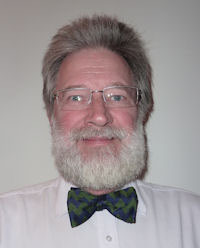
Julian Walton FIGRS Julian C. Walton has made a truly remarkable contribution to the study of Irish genealogy over five decades. Through his meticulous research and scholarly articles, his transcription of memorial inscriptions and his engaging communication of genealogical and local history topics, he has contributed greatly to the furtherance of ancestral research in Ireland. He is widely regarded as one of the most knowledgeable genealogists in Ireland, particularly in relation to the more esoteric early modern sources. The Irish Genealogical Research Society (IGRS) has been fortunate to have him as a member for over half a century. From the beginning he was a willing volunteer. Much of Julian’s work in Irish genealogy was done through his membership of the IGRS. He joined the Society in 1969 and immediately became immersed in voluntary work. From 1970 to 2003 he served on the editorial committee of The Irish Genealogist, the Society’s annual journal, and he was Honorary Editor in 1988-1989. In 1971 the IGRS Tombstone Sub-Committee was established and Julian was its secretary throughout its existence. Its endeavours culminated in the 2-volume Tombstone Inscriptions compilation produced by the IGRS in 2001. In the early 1970s he was one of a group of IGRS members who arranged occasional lectures in Dublin. This led to the official formation of the IGRS Ireland Branch in 1986 and he served as Chairman of the branch from 1986 to 1990. Julian was elected a Fellow of the Society in 1975. He was appointed to the Council in 1983 and he has been a Vice-President since 1988. In more recent years Julian has been involved in genealogy and local history in the Waterford area. He was editor of Decies (the journal of the Waterford Archaeological and Historical Society). In 1990 he began work with the Waterford Heritage Survey. This involved record indexing, conducting research and running a heritage induction course, before undertaking the conservation of the library of Christ Church Cathedral, Waterford. This involved work on 3,000 books, some dating from the sixteenth century. He later conducted similar work on the library of St. Finbarre’s Cathedral, Cork, at the Boole Library in University College Cork. Julian lectured widely on aspects of Irish genealogy and local history. He spoke at the 1st, 2nd and 3rd editions of the Irish Genealogical Congress, giving the keynote address at the 2nd IGC. His many contributions to Waterford history included popularising the subject through a weekly slot on the local radio station WLRFM, starting in 1993. Two selections of his radio stories were published in the 2010s, with accompanying audio discs. Perhaps his most lasting contributions to Irish heritage are his writings. His book The Royal Charters of Waterford was published in 1992. He contributed articles to various periodicals, including Decies, Analecta Hibernica, the Irish Ancestor and, of course, the Irish Genealogist. Those in the Irish Genealogist include various ‘Beginners’ Pages’ published in between 1980 and 1987, miscellaneous transcribed monumental inscriptions, hearth money rolls from Co. Kilkenny, references to eighteenth century Irish inhabitants of Cadiz, Waterford Freemen 1542-1650, and detailed histories of the Aylward and Bolton families. |

2020
|
|
Marie E. Daly Marie has been researching, lecturing, and writing about Irish genealogy since 1976, the year she made her first visit to Ireland. In 1983 she helped found the Massachusetts-based TIARA (The Irish Ancestral Research Association) and she served as president for its first three years. She joined the staff of the New England Historic Genealogical Society (NEHGS) in Boston in 1987. Over three decades she worked in the posts of Chief Financial Officer, Director of Library Services and Senior Genealogist. She led NEHGS’s Irish research programs for decades. Along the way she edited TIARA’s Newsletter, contributed to gravestone transcription projects, wrote in NEHGS’s publications, Register and Nexus, lectured at conferences in New England and Ireland, and worked on her own family history. With Judith Lucey, she wrote NEHGS’s Genealogist's Handbook for Irish Research, published in 2016. She retired the following year but she continues to pursue local and family history, serving as a board member and municipal commissioner on a number of genealogical and historical organisations. |
|
|
Christina Hunt Chris is a dynamo in Irish genealogy. She is the moving force behind Ireland Genealogy Projects (IGP) founded in 2000 which encourages others to contribute a wide variety of genealogical information and data: church records, directories, gravestone inscriptions, memorial cards, newspaper obituaries, wills, etc. Since 2012 she has been the overall manager for the entire project, overseeing the collation and digitization of many useful records for the worldwide Irish genealogy community. Under her guidance IGP has grown to be a serious provider of free online Irish genealogical data. In order to help promote the Project, in 2012 Chris set up a number of IGP county pages on Facebook, through which thousands of people on a weekly basis learn and exchange knowledge about Irish genealogical research and history. |
|
|
Guillermo MacLoughlin Guillermo's unique contribution to Irish genealogy lies in his long and influential position amongst people of Irish descent in Argentina and his involvement in Irish-Argentine relations. Argentina has one of the most proud and active Irish Diaspora in the world, where at least half a million Argentines have Irish ancestors. Guillermo is sixth generation Irish in Argentina. His father's family is entirely of Irish descent and originates in Glascorn, five miles from Mullingar, in Co. Westmeath, and his mother's family is a mix Irish and Spanish descent. He is a public accountant, an economist, a historian, but not least an expert genealogist and at one time a long standing member of the IGRS. He has lectured widely and his research has appeared in many publications. Since 2009 Guillermo has held the position of director and editor-in-chief of The Southern Cross, an Argentinian newspaper founded in 1875, covering Irish current affairs, cultural and social matters, and issues of historic and genealogical interests. Guillermo’s association with The Southern Cross dates back to the mid-1970s when its then editor encouraged him to write local histories relating to the Irish community in Argentina. He has since gone on to map the story of the Irish in Argentina. |
|
|
William Delmar O’Ryan (1915-1969) Up until his death Bill O’Ryan had over the course of a number of decades amassed a huge quantity of genealogical material relating to the surname Ryan, O’Ryan or Mulryan from around the globe. This was helped by the fact that he worked for the US Foreign Service, which facilitated him travelling overseas. Wherever he visited he attempted to acquire Ryan biographical, historical and genealogical information, no matter how brief. Some of the places where he gathered data include Argentina, Canada, Chile, England, Ireland, Norway, Spain, Tenerife, USA, the Vatican State, and the West Indies. After Bill’s death, at a relatively young age, a letter was found in which he hoped that the IGRS would benefit from his work. He had been a member of the IGRS since 1963. His collection ran to seven filing cabinets stuffed with paperwork which, as his son, Rick, and daughter, Josephine, said on accepting the Award for their father, was achieved “with a typewriter, carbon paper, pen and stamps as well as his many visits to libraries around Europe and the world”. A digital copy of Bill’s material has been donated to the IGRS which will in due course become available on the Society’s website. |